Rising proudly above Hallasan, the highest mountain in South Korea, the mountain dominates the centre of Jeju Island with quiet authority.
For hikers like us, living in Jeju has given us the rare opportunity to climb this magnificent mountain many times. Yet there was always one experience we longed for, something special that only happens once a year. Watching the first sunrise of the year from Hallasan.
Every 1st of January, a special event allows hikers to begin climbing at 2 a.m. so they can reach the summit in time for the first sunrise of the new year. It sounds simple, but securing a place for this climb is almost like going to war. Registration opens at a specific moment, and hundreds of people are waiting. You prepare everything in advance, fill out the forms, and wait for the clock to strike the opening time. Then you click the registration button, and chaos begins. Either the website crashes, or the slots disappear instantly. In short, successfully registering feels like winning a small lottery. Luckily, thanks to Ki’s determination and persistence, we managed to secure a spot.
Now the only thing left to do was prepare ourselves, both mentally and physically. Climbing Hallasan in winter is not easy. The cold alone adds extra time to the climb, and the weather can turn against you quickly. January is the peak of winter in Jeju, meaning freezing temperatures and powerful winds are constant enemies. If the snowfall becomes too heavy, the climb is cancelled entirely. All of this makes the one-day window for the New Year sunrise both incredibly challenging and incredibly magical.
And so our story begins. The date was January 1st, 2026. Before even stepping onto the trail, there was another obstacle we had to overcome: parking. Just like the registration, finding a parking space can feel like another battle. If you arrive too late, the parking area fills quickly. Your only option then is to park at another lot about ten minutes away from the Seongpanak Trail entrance and take a bus or taxi back, which could easily make you miss the sunrise.
For this climb, we chose the Seongpanak route. There are two main trails leading up Hallasan. The other route begins at Gwaneumsa Trail. While Gwaneumsa has a larger parking area, the climb is longer, and from some parts of the trail you cannot see the sunrise unless you reach the summit. Seongpanak, on the other hand, offers a special advantage. Once you pass Jindallaebat Shelter, the horizon begins to glow. Even before reaching the summit, you can see the sky turning orange as the sun prepares to rise.
To avoid parking problems, we drove to Seongpanak right after dinner on New Year’s Eve. We were among those early hikers making sure of a parking spot, so we stayed in the car and slept briefly. We woke shortly after midnight and immediately started getting ready. We drank coffee and ate what we jokingly called an early dawn breakfast, making sure we had enough energy. By around 1 a.m., the line at the entrance was already growing. Headlamps flickered in the darkness as hundreds of hikers prepared. Then our climbing journey began.
From the very beginning, it felt less like hiking and more like a marathon. The narrow trail was packed, with around twenty people ahead of us and hundreds behind. Slowing down was difficult because the crowd moved together. You could stop, but if you did, hundreds of people would pass you and you would fall far behind. For the first hour and a half, we were doing well, but the extreme cold and strong wind began to take their toll. Our bodies started trembling, and we began to feel unwell. At the first shelter, we stopped briefly to eat snacks and regain energy, but it felt discouraging to see many hikers continue past us.
Eventually we reached Jindallaebat Shelter, the final resting point before the summit. The shelter was full, so we rested outside on a bench. Using a clear plastic tarp as a makeshift windbreaker, we tried to recover while eating a few snacks. That was when we realised our mistake. We had brought too much gear, heavy bags filled with extra clothing and food. The weight, combined with the cold, was exhausting us. I felt dizzy, and Ki was also starting to feel unwell. He asked if we should continue. For a moment, I wanted to stop, but the desire to see the sunrise pushed us forward.
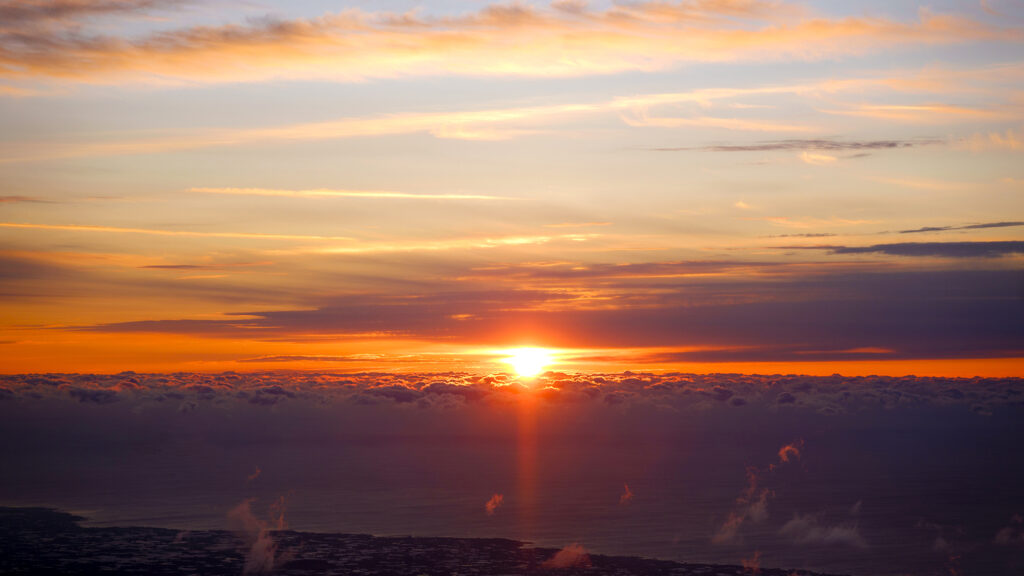
As we climbed higher, the sky slowly turned orange, urging us on. We gave everything we had, but the final section slowed us down. It became clear we would not reach the summit in time. Just below the peak, alongside dozens of other hikers, we set up our cameras and watched the first light of 2026 slowly spread across the sky. It was not the summit view we had hoped for, but it was still Hallasan. The feeling was bittersweet. After sunrise, many hikers continued to the summit, but we chose to descend. Our bodies were no longer in good condition, and there was no reason to push further. We made our way down quickly, stopped for lunch, and returned home to rest. That was how we welcomed 2026, with a sunrise, sore knees, aching bodies, and slight illness, yet completely worth it.
If you enjoy this kind of adventure, follow our journey. We believe life should sometimes go beyond the ordinary, chasing crazy hobbies, climbing mountains in the middle of the night, and appreciating the wild beauty of nature.
See you in our next story.