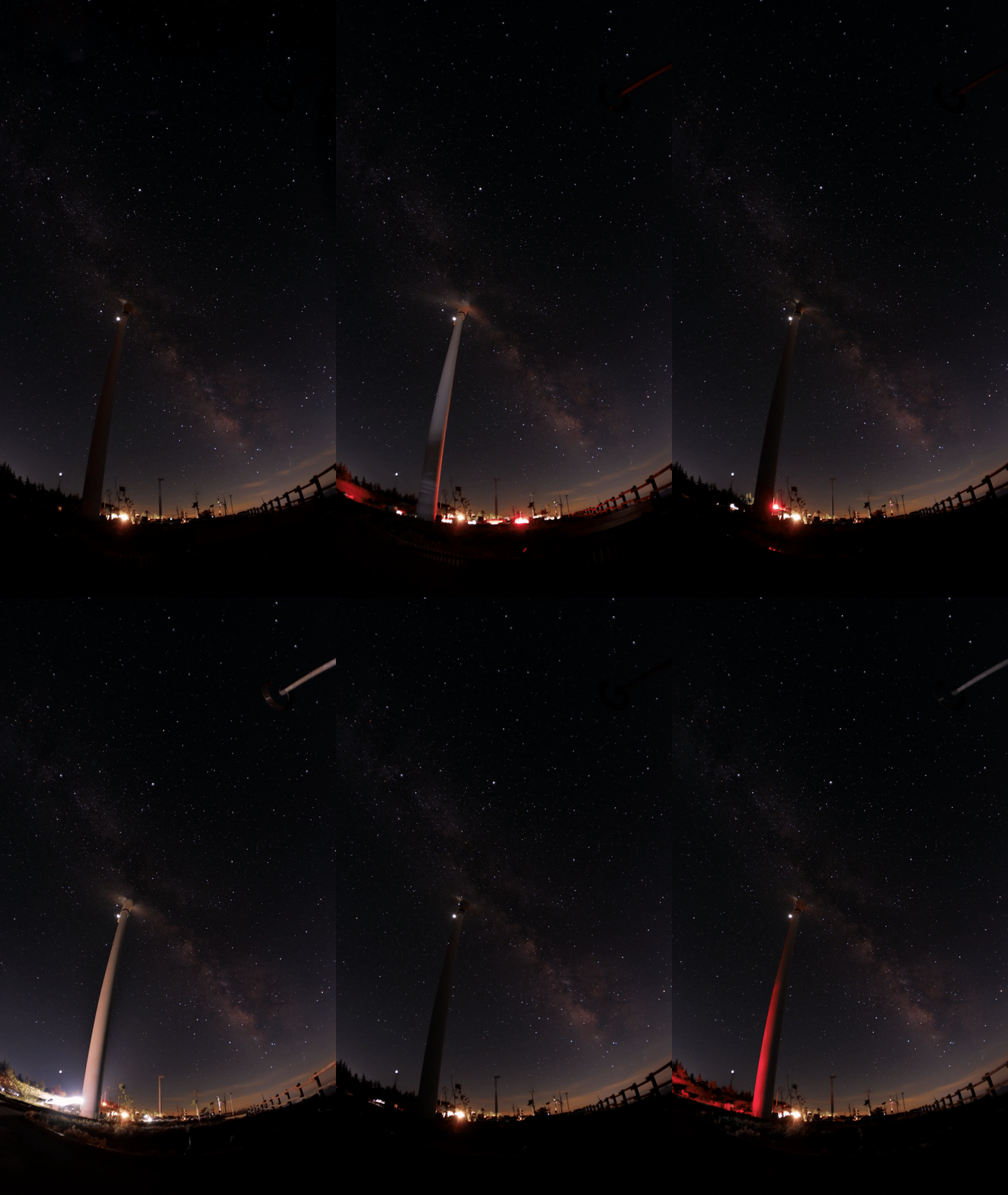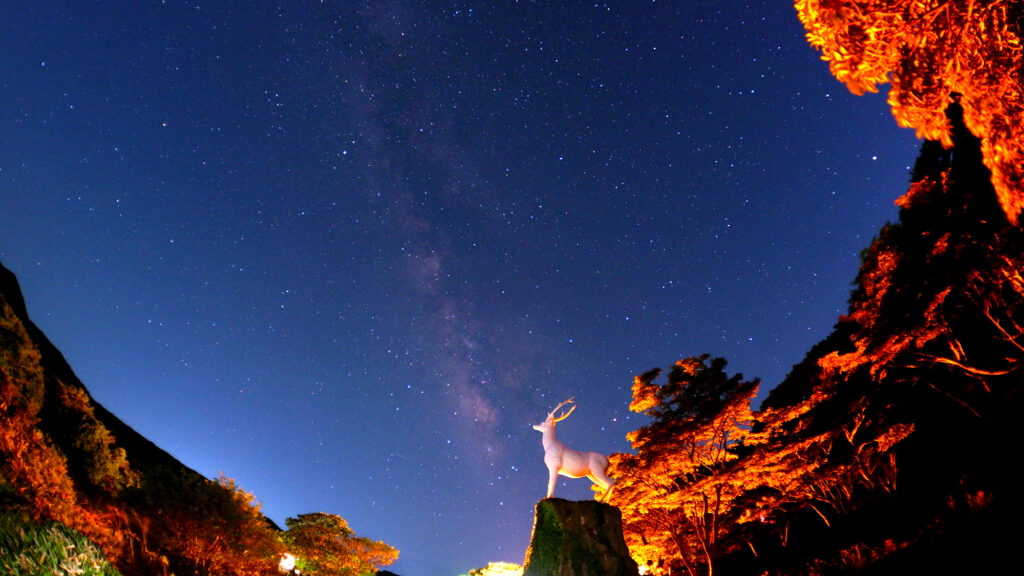
In South Korea, astrophotography isn’t as simple as stepping outside and pointing your camera up. This country is alive at night. Street lamps, apartment complexes, highways, shop signs, and glowing city skylines create a beautiful “second daylight” after sunset. But for astrophotographers, that brightness comes at a cost. The sky in most places is heavily affected by light pollution, and in bright cities like Seoul, the darkness you need simply doesn’t exist. Even on a clear night, the sky often looks pale and gray instead of deep black, and only the strongest stars manage to break through. The rest, the faint constellations, the subtle star dust, and the delicate glow of the Milky Way, gets completely washed out.
That’s why capturing the Milky Way in Korea usually means one thing: going far away from the city. It’s not about having the most expensive camera or the sharpest lens. It’s about finding darkness. You have to escape the endless glow of urban life and travel to places where the night finally feels like night again. Often, that means driving deep into the countryside late in the evening, passing quiet towns and sleeping villages, and watching the city lights slowly disappear behind you. It means searching for remote coastlines where the ocean horizon is open and the air feels cleaner, or heading into mountain regions where fewer streetlights exist and the sky stretches wider above you. Sometimes it even means standing in silence at 2 or 3 AM, surrounded by nothing but wind, cold air, and the sound of nature, waiting for your eyes to adjust, waiting for the stars to slowly reveal themselves.
Only then does the sky change. The darkness deepens. The number of visible stars multiplies. Constellations that felt invisible in the city suddenly become obvious. And when conditions are right, when the moon is gone, the humidity is low, and haze stays away, the Milky Way finally appears, not as a dramatic movie sky, but as a soft, breathtaking band of light quietly stretching across the heavens. It feels like the universe is rewarding you for the effort. In that moment, you understand why astrophotography in South Korea is a chase, because the most beautiful skies here aren’t given easily. They’re earned.
So where do you actually go in Korea for Milky Way photography?
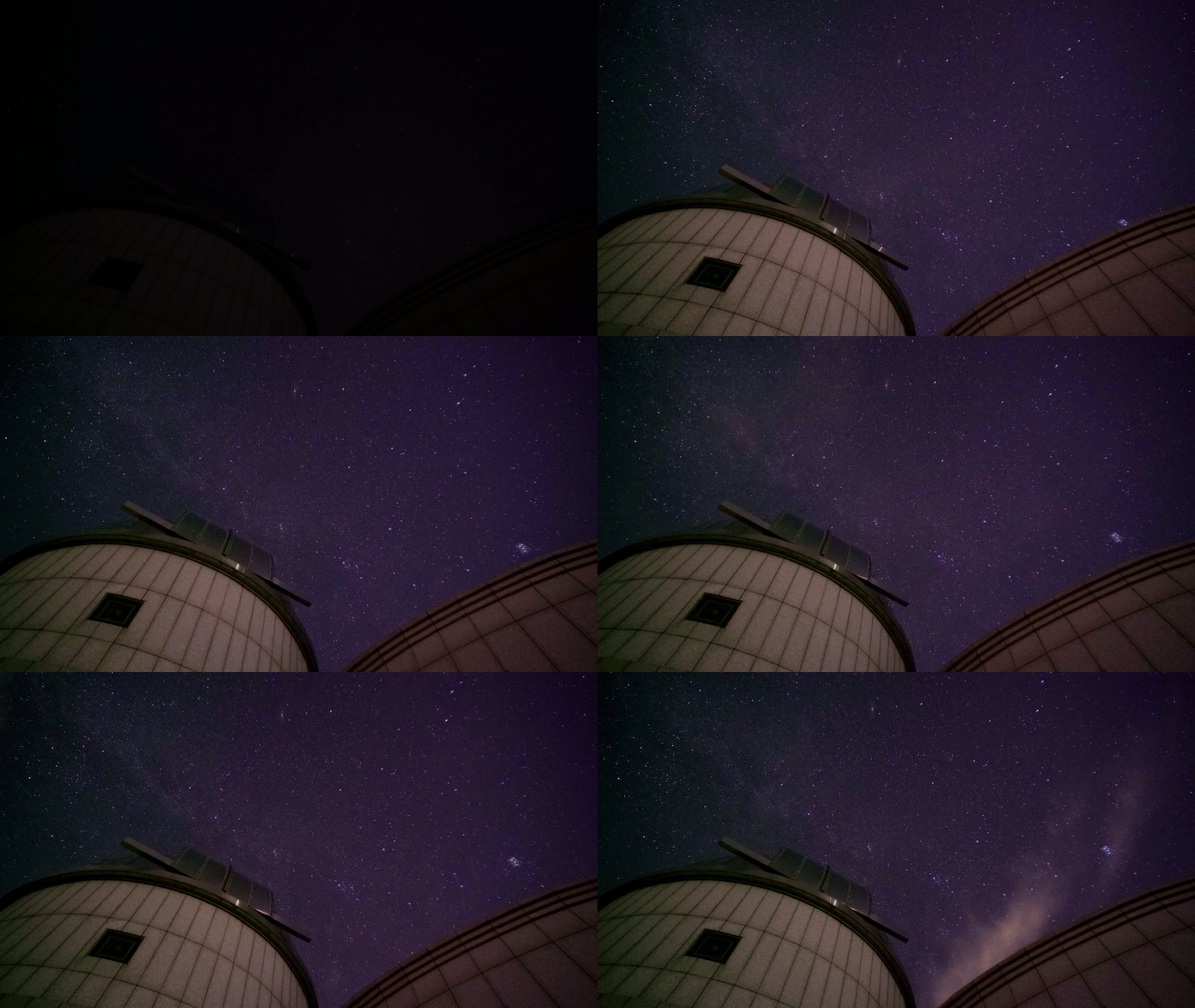
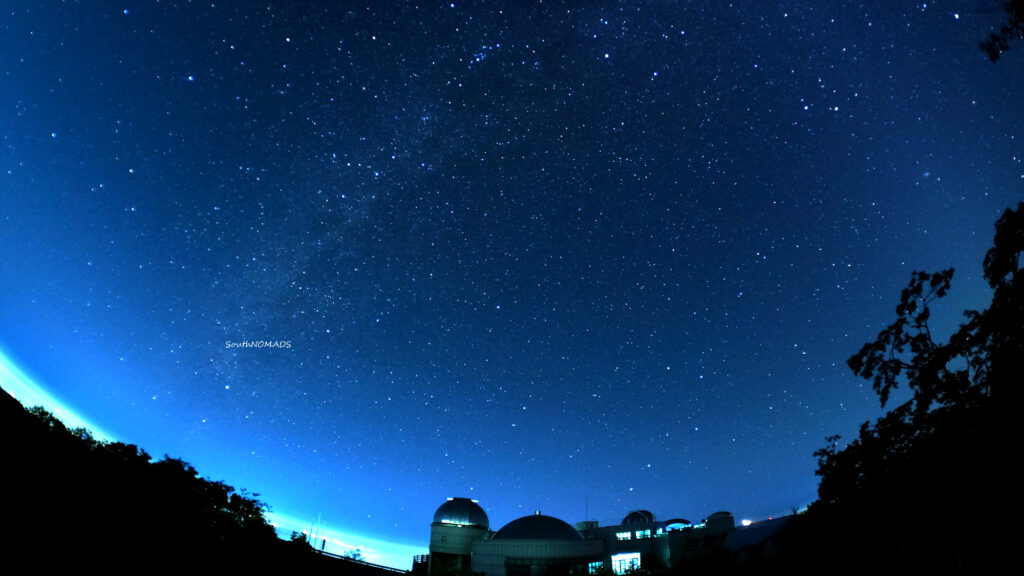
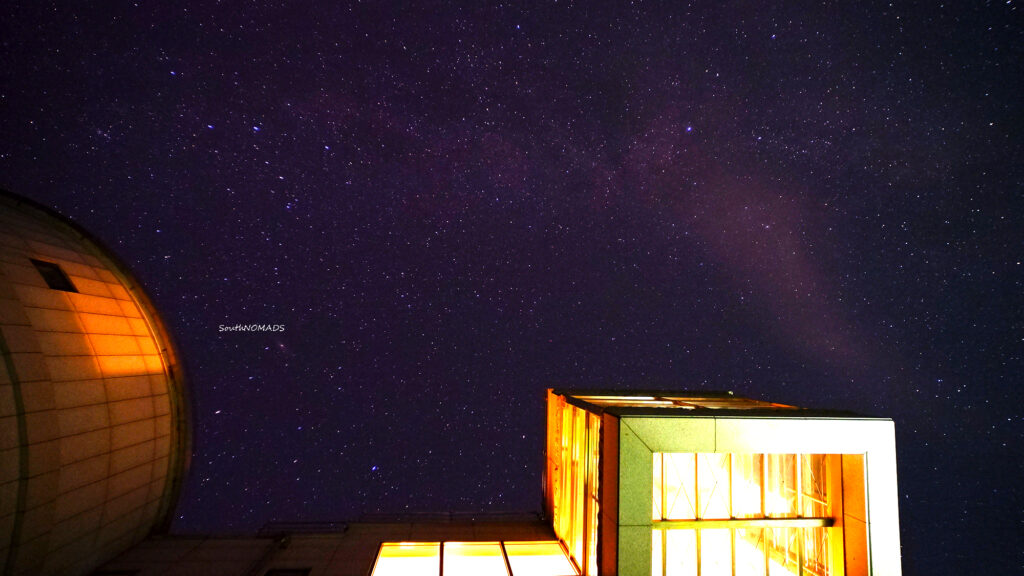
For us, one of the first places that truly felt like a doorway into the night sky was Cho Kyong Chol Astronomical Observatory 조경철천문대. When you’re chasing the Milky Way in South Korea, you’re not simply hunting for a pretty location to take photos. You’re searching for a rare kind of darkness that modern life has almost erased. You’re searching for silence, for distance, for a place where the night isn’t drowned by neon signs and street lamps. In a country where the cities glow like constellations on the ground, finding a sky full of stars feels like discovering a hidden world. It’s one of those rare moments where the sky finally becomes the main character.
The journey there already feels like part of the magic. The moment you begin driving toward the observatory, the world starts to change in small, almost poetic ways. The harsh brightness of the city slowly fades behind you, replaced by quieter roads, darker hills, and long stretches of night where your headlights feel like the only light left. It’s in this in-between space, somewhere between civilization and wilderness, where that familiar astrophotographer feeling starts to rise: hope. The deeper you go, the more you start believing that tonight might be the night. The night the sky finally opens. The night you finally capture what you’ve been dreaming of. And then, when you arrive, reality greets you instantly. It’s colder than expected, always. Even during seasons when the daytime feels warm, the air here feels different. Crisp, clean, almost sharp. The kind of cold that doesn’t ask if you’re ready. It simply reminds you that you’re standing under something bigger than yourself.
And then comes the moment that makes everything worth it. You step out of the car, and without thinking, you look up. At first, it’s subtle, a few stars scattered across the darkness. But as your eyes adjust, the sky begins to reveal itself layer by layer. More stars appear. Then even more. And suddenly, you realize how crowded the sky can be when it isn’t stolen by city lights. In places like Seoul, you forget what a true night sky looks like. You forget that the heavens can feel endless. But here, away from the harsh glow, the constellations become clearer, as if someone turned up the contrast on the universe itself. The darkness deepens into velvet, and in that darkness you understand why places like this matter, not just as destinations, but as reminders that South Korea still has hidden pockets of real night sky, if you’re willing to travel for them. And if you’re lucky, if the moon stays away, the haze doesn’t creep in, and the weather holds, the Milky Way will finally show itself. A faint, milky river of light stretching across the heavens, quiet but breathtaking. It doesn’t feel loud or dramatic. It feels earned. Because that’s the truth about photographing the Milky Way in Korea. It isn’t handed to you. You earn it through planning, driving, waiting, cold hands, tired eyes, and stubborn patience. But when you finally press the shutter and your camera captures that glowing band of stars above you, you don’t just take a photo. You take proof. Proof that even in a country famous for its city lights, the universe still has a place to shine.
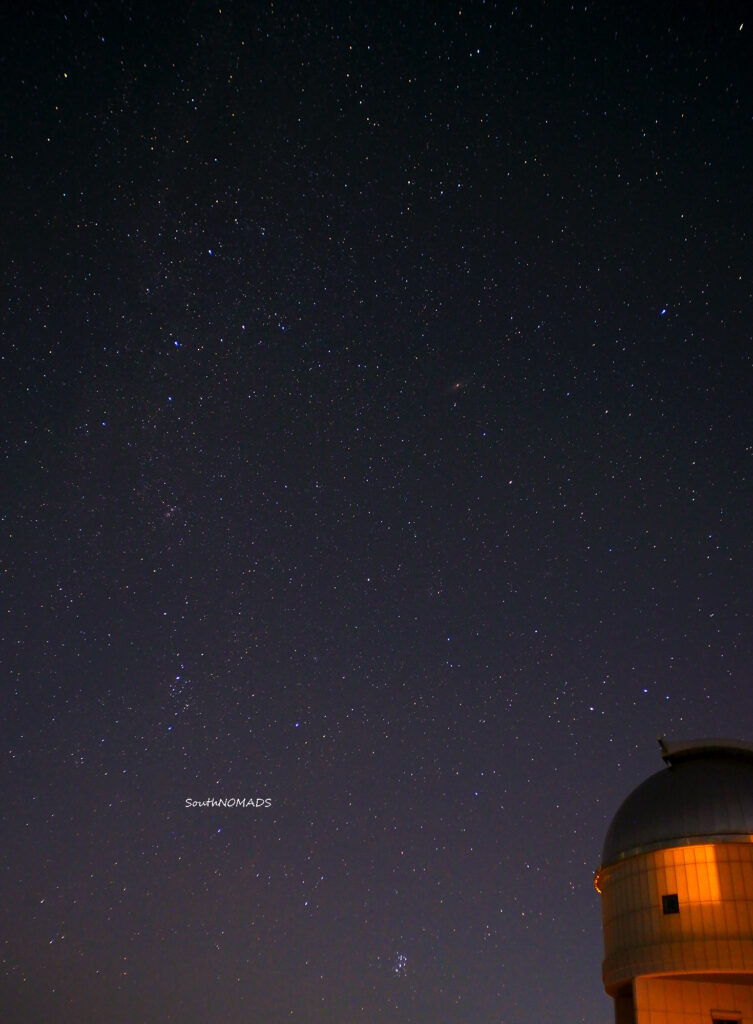
After chasing dark skies on the mainland, Jeju Island felt like the next natural step. Not because it’s empty or untouched. Jeju is one of the most visited places in Korea. But because it still offers something rare. Skies that can actually show the Milky Way when conditions align. And for many astrophotographers, there’s one name that always comes up in the conversation, almost like a rite of passage. 1100 Highland 1100고지.
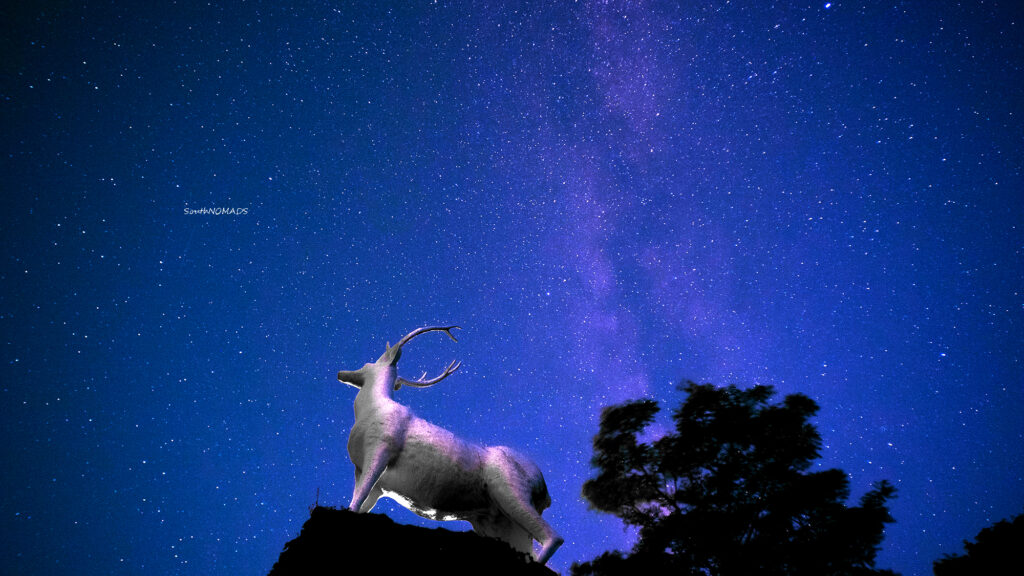
If you’ve heard of it, you already know this place is famous. Not just among photographers, but among tourists too. And yes, even at night. It’s not the kind of location where you’ll be completely alone in silence with the stars. There are cars coming in, people stepping out to look up, headlights sweeping across the parking lot, and that familiar Jeju night energy where visitors still want to experience something special before they go home. In a way, it feels like everyone is chasing the same thing, that one clear moment when the sky turns breathtaking.
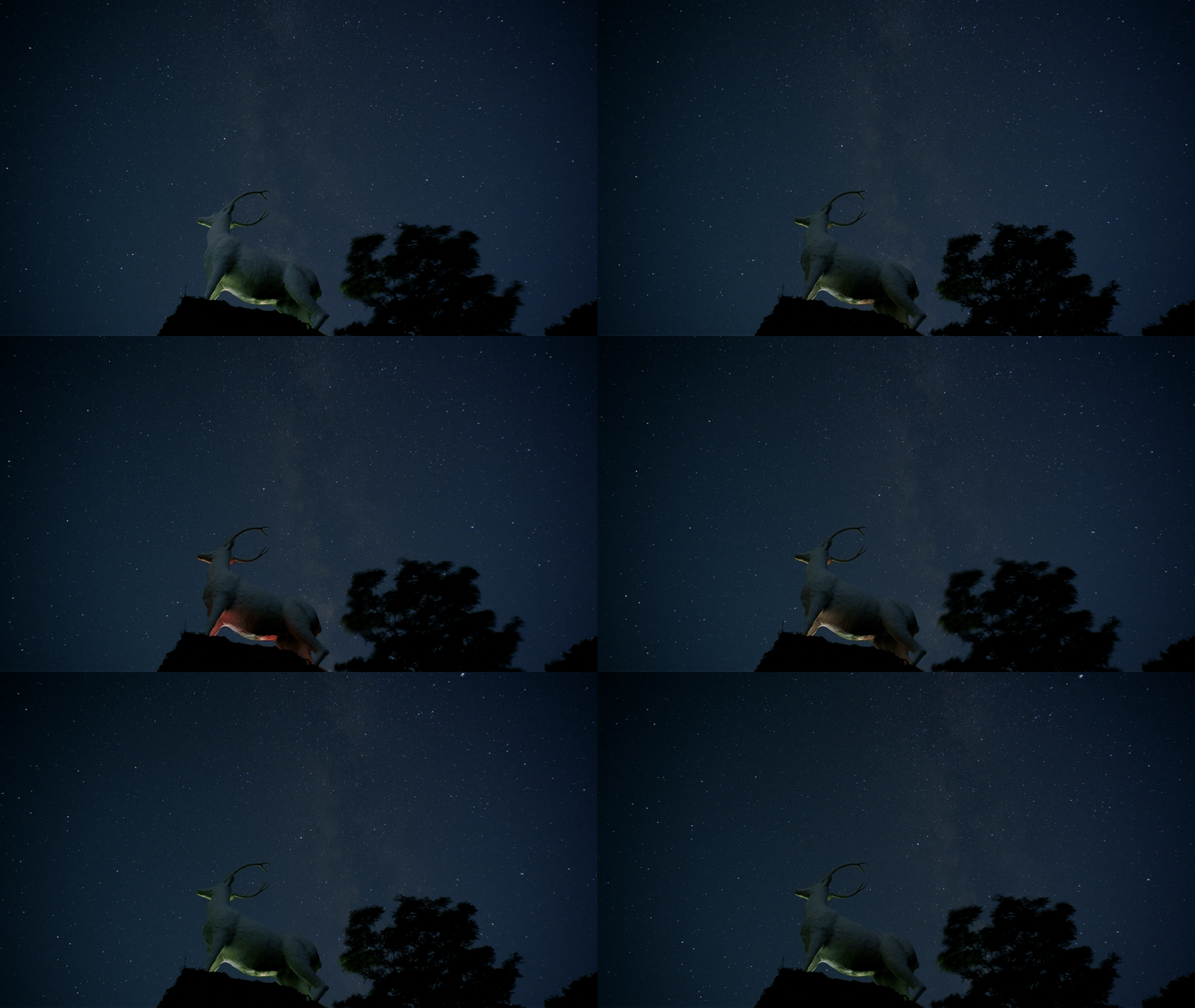
But despite being touristy, 1100 Highland still has a kind of magic that’s hard to deny. The road climbing up feels like you’re leaving the island behind and entering Hallasan’s territory. Higher altitude, colder air, stronger winds, and a darker horizon compared to the city areas. And when you finally arrive, you can feel the shift. Even with people around, the sky above you feels wider. Deeper. More alive. The stars show up faster here than they do in most places, and the cold air almost forces you to pay attention. You don’t casually scroll your phone for long. You look up. You adjust your eyes. You start counting stars without meaning to.
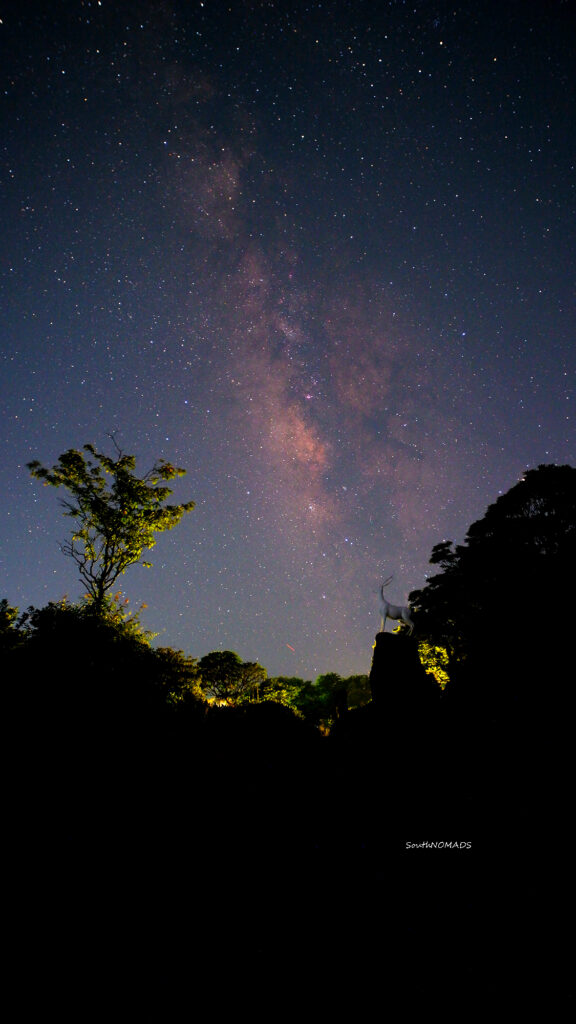
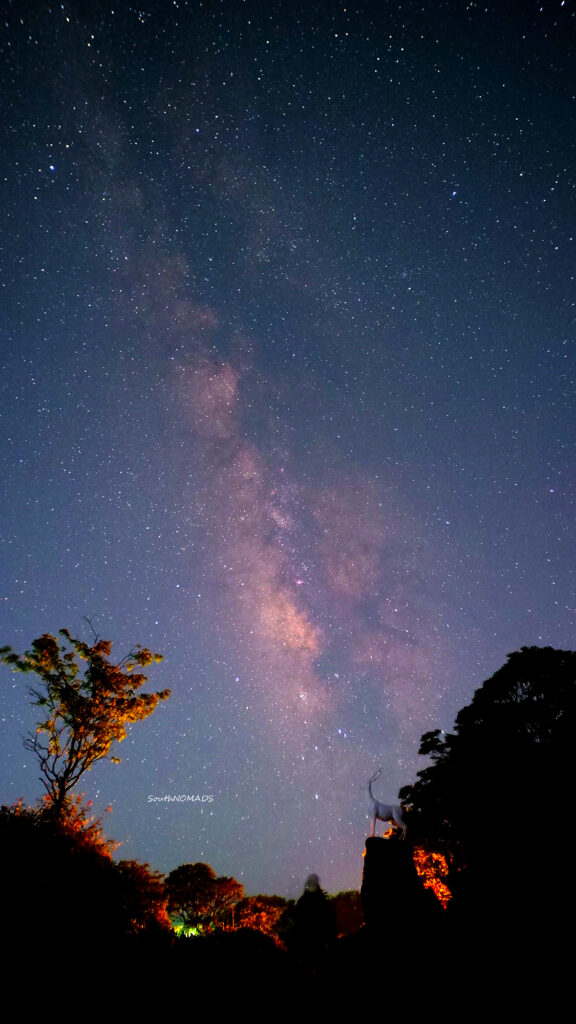
And then the real chase begins. Astrophotography at 1100 Highland isn’t the dreamy “quiet alone in nature” scene people imagine. It’s more like a mission. Finding your angle, timing your shots between passing lights, guarding your long exposure from random headlamps, and silently hoping no one walks into your frame at the exact wrong moment. Yet somehow, that struggle becomes part of the story. Because when the sky is clear and the moon stays out of the way, the Milky Way begins to appear, slowly, faintly at first, like a whisper. A pale band stretching across the night, becoming clearer the longer you stay and the more your eyes adjust. And the moment your camera captures it, the moment you see that soft galactic glow on your screen, you forget about the cars, the noise, the tourist crowd. For a few seconds, it’s just you and the universe.
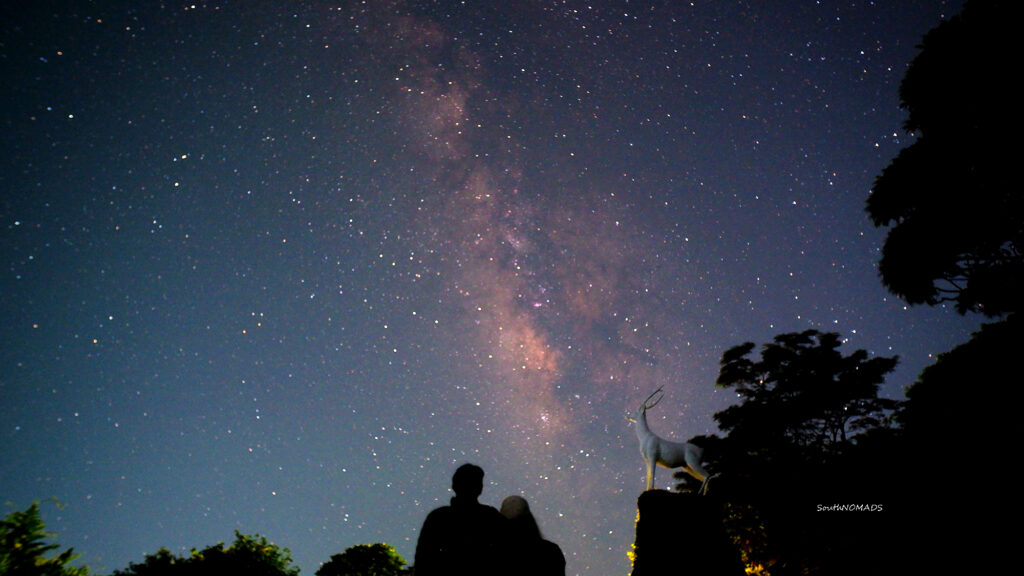
That’s what makes 1100 Highland unforgettable. It’s not perfect. It’s not quiet. It’s not private. But it’s real. It’s one of those places where South Korea’s night sky still fights through the modern glow and reminds you that the Milky Way is still there, waiting above Jeju, if you’re patient enough to catch it.
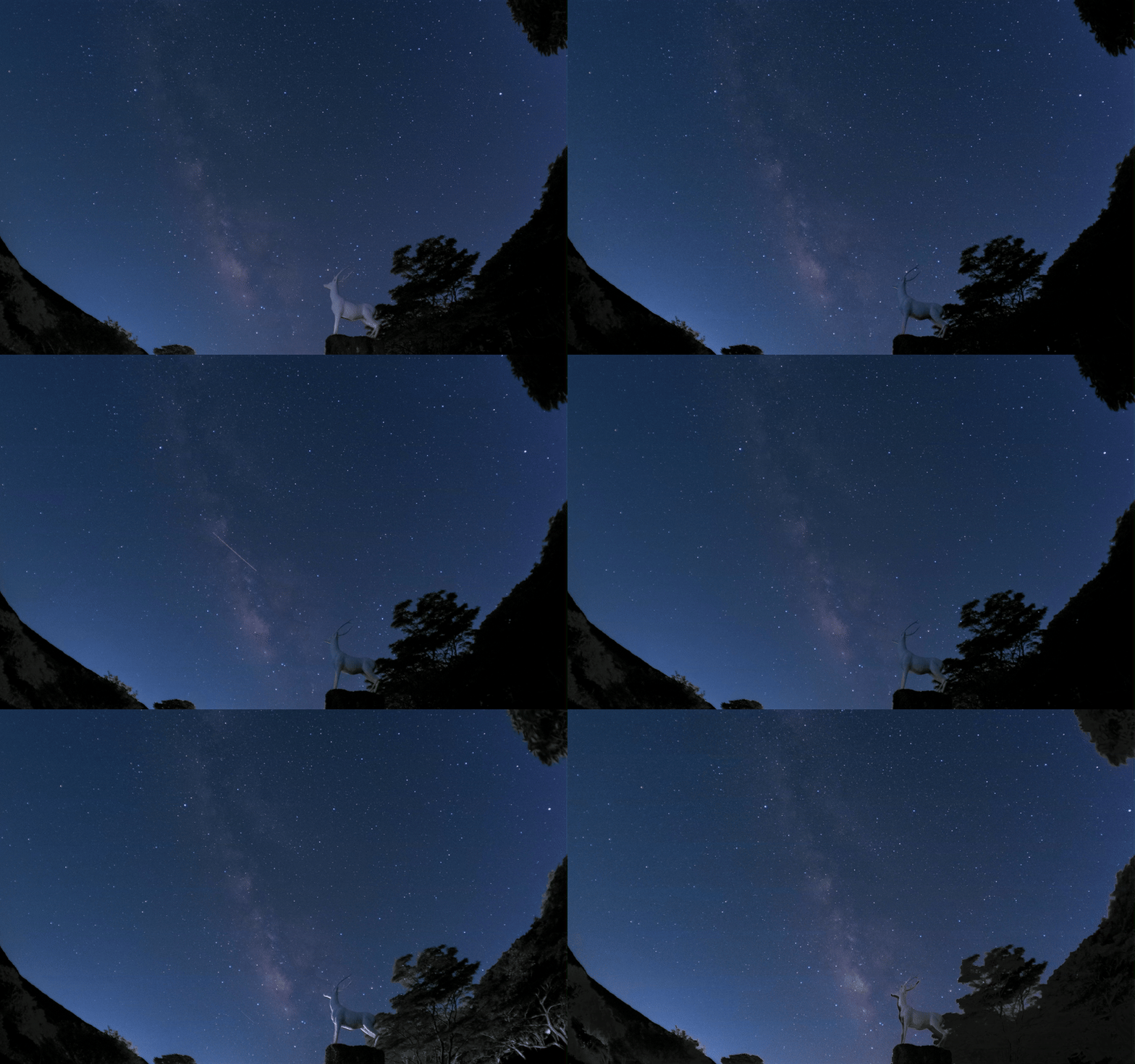
Not every Milky Way chase in Jeju leads you to a famous astro destination. Sometimes the most memorable nights happen in places that aren’t even known for dark skies. These are places you choose not because they promise perfection, but because they offer something visually irresistible. That’s exactly how we ended up at Saebyeol Oreum 새별오름. It wasn’t the darkest location on the island, and we already knew that going in. The area is still affected by light pollution, and Jeju, no matter how beautiful, can’t completely escape modern lighting. But Saebyeol Oreum has a presence that makes you want to try anyway. The open space around it gives you a wide view of the sky. Even if the stars aren’t as strong as they could be in a truly remote place, the landscape itself still feels made for stargazing.
Once we arrived, it became clear that this wasn’t going to be a “Milky Way masterpiece” kind of night. The sky was still beautiful, but not deep enough for that crisp galactic band photographers dream of. And instead of feeling disappointed, we made a decision that changed the entire mood of the shoot. We stopped chasing the Milky Way and started chasing movement. Saebyeol Oreum is perfect for star trails because it gives you something many dark-sky spots don’t, a stunning foreground. We walked around quietly, scanning the area like we were searching for a secret doorway into the frame. And then we saw it, a lone tree, standing in the open like it had been placed there for exactly this purpose. Simple, isolated, and full of character. We knew immediately that if the sky couldn’t be the main star tonight, then this tree would be. We framed it carefully, set the tripod low and steady, and prepared for a long session of patience.
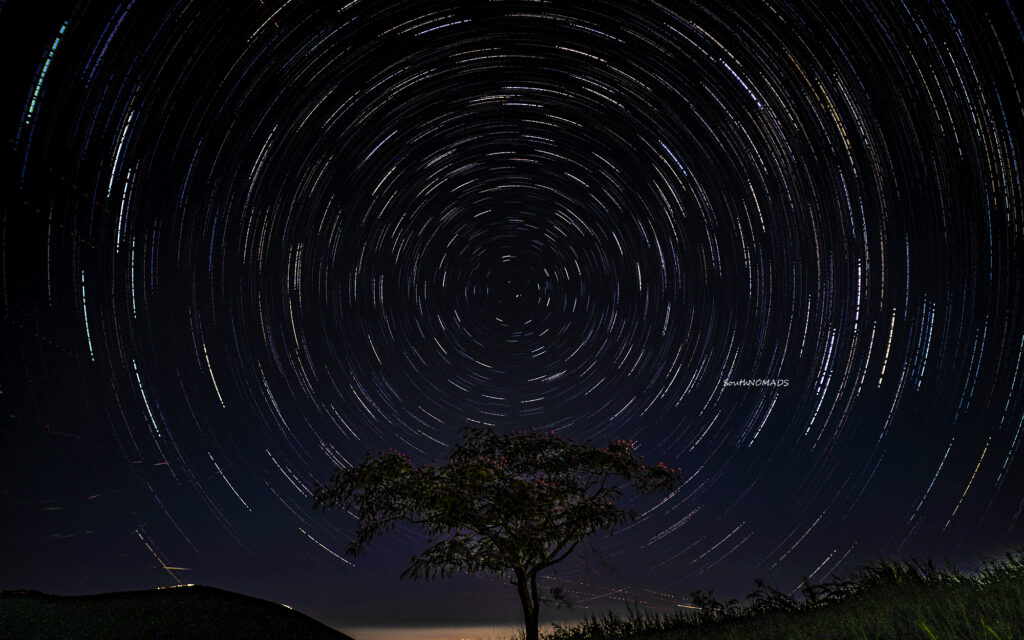
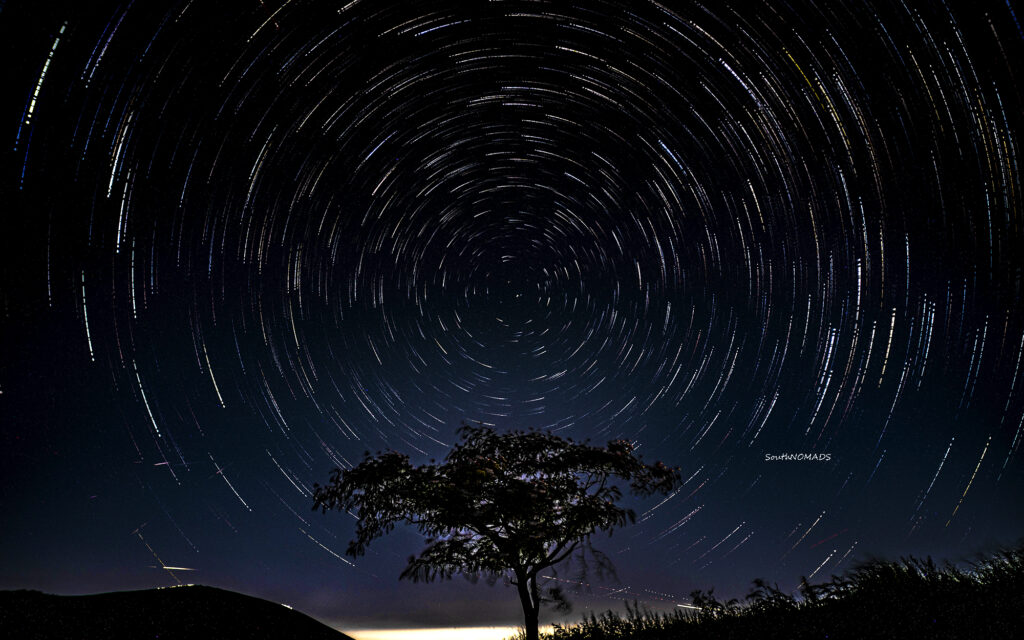
Star trails are a different kind of astrophotography. They don’t reward speed, they reward endurance. As the minutes passed, we kept shooting, stacking time into our camera one exposure at a time. The oreum stayed silent, the wind brushed through the grass, and everything around us felt still, except the sky. That’s the part that always feels unreal. You can’t see the movement with your eyes, but your camera slowly reveals it. When we finally checked the images later, the result felt like magic. The tree stood perfectly still like a witness, while the stars curved above it into glowing trails, proving the Earth had been turning the entire time. Saebyeol Oreum may not be the best place to capture a dramatic Milky Way, but it gave us something just as unforgettable. A sky that wrote its own story in circles of light.
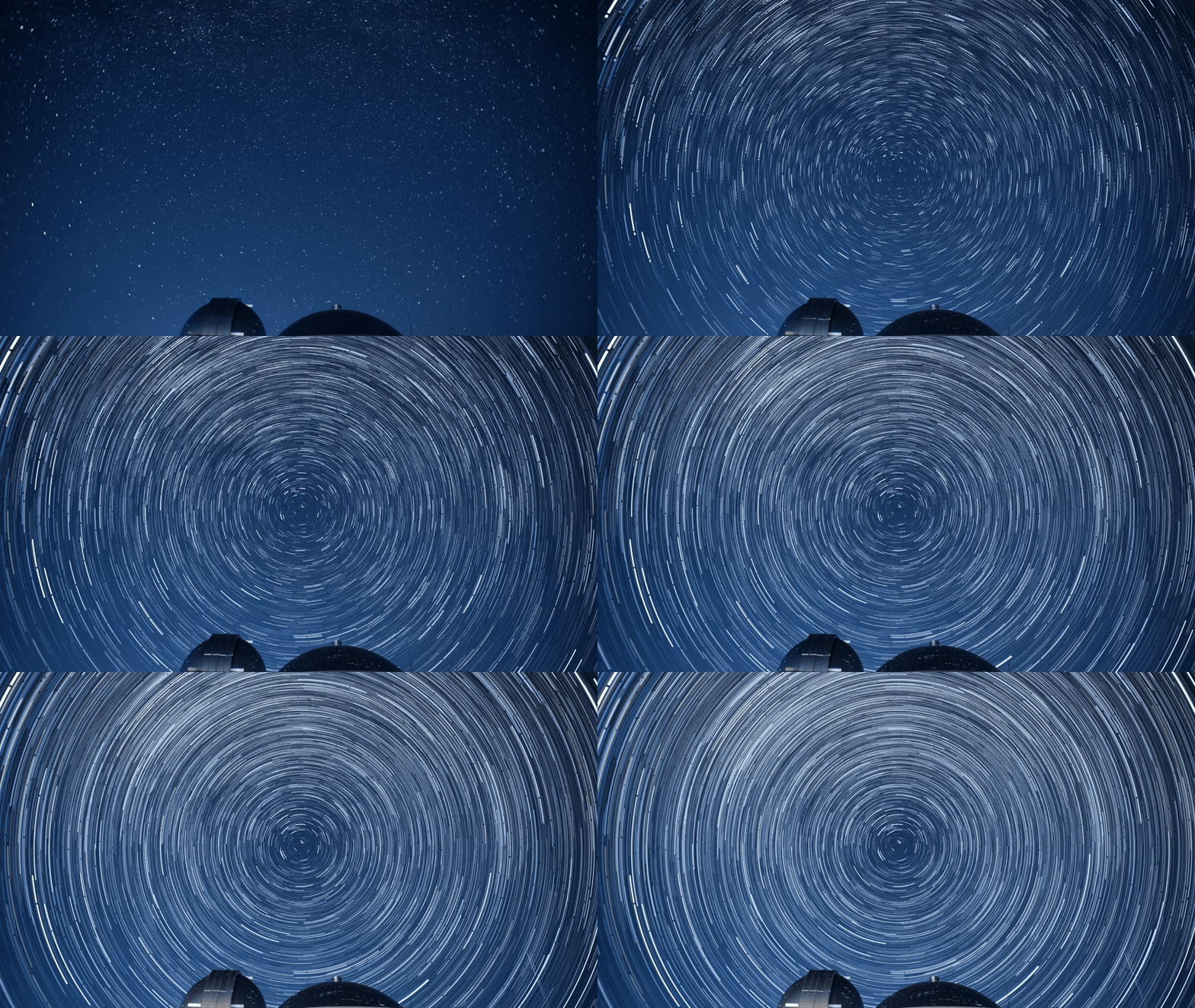
This was way earlier than Jeju. The night that truly changed everything happened in Pyeongchang Yukbaekmajigi 평창 육백마지기 and honestly, we didn’t realize at first that we were about to witness the best Milky Way we’d ever capture in South Korea. Yukbaekmajigi is already known among photographers as one of those rare places where the sky actually performs. High elevation, wide open views, and a feeling of being far from the harsh city glow have built this place’s reputation for breathtaking night displays. But no matter how famous a location is, astrophotography always comes down to one thing: timing. You can drive for hours, plan for weeks, and still go home with nothing. That’s why we didn’t expect too much. We only knew one thing. We had to try. Because some skies don’t give second chances.
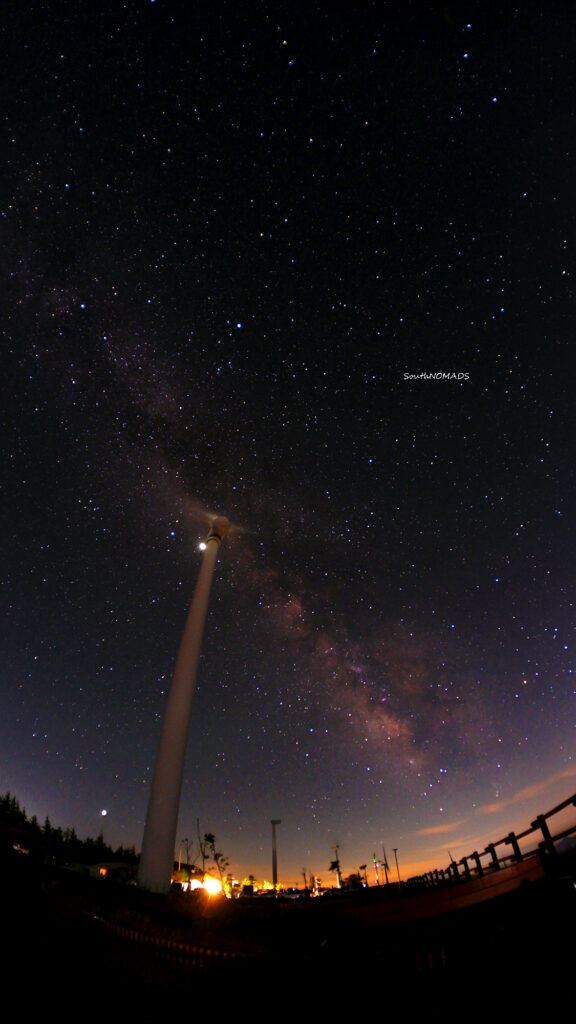
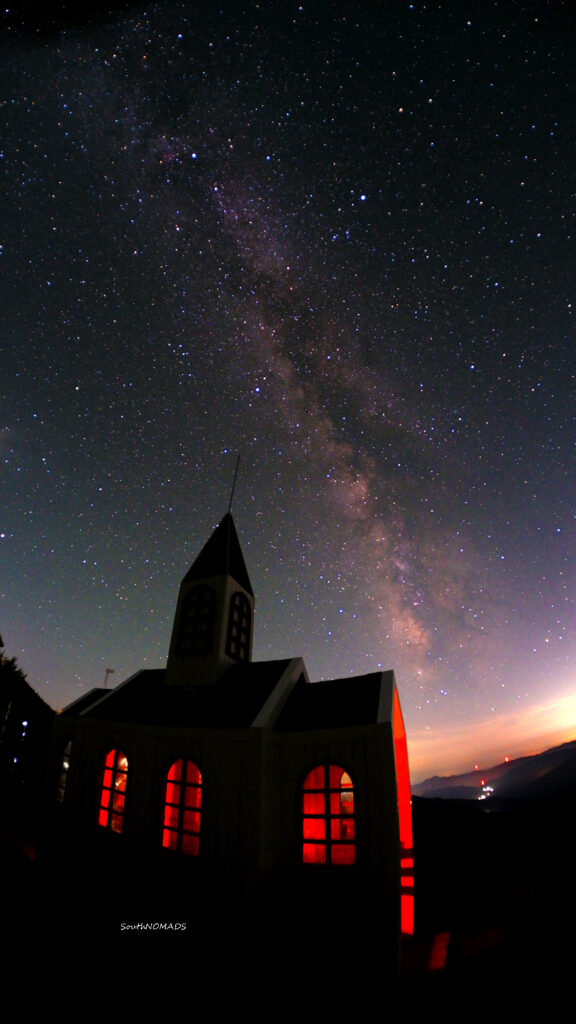
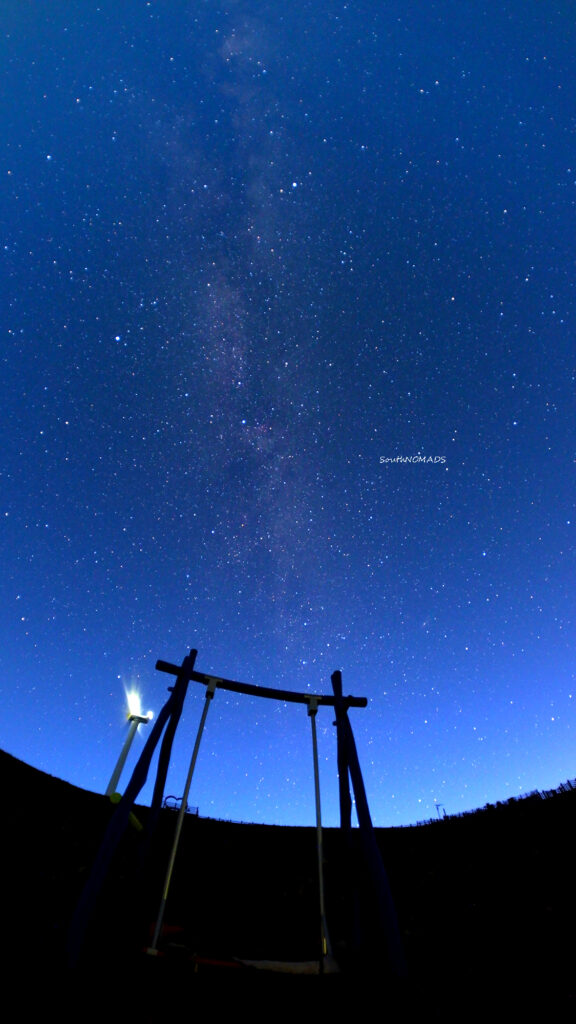
And that night, the universe didn’t just cooperate. It showed off. The timing was perfect, the moon stayed away, and the weather felt like a gift handed directly to us. The moment darkness settled in, the sky began to explode with stars, one by one, until it felt like someone spilled glitter across the heavens. We stood there quietly, almost stunned, because the stars weren’t just visible. They were overwhelming. The air was crisp, the mountain silence was deep, and the entire landscape felt like it was holding its breath with us. Then it happened. The Milky Way began to rise, slowly and confidently, like a glowing spine stretching across the night. It wasn’t faint. It wasn’t shy. It was bold, layered with dust clouds and bright star clusters, the kind of Milky Way you only see in dreams, or on rare nights like this.
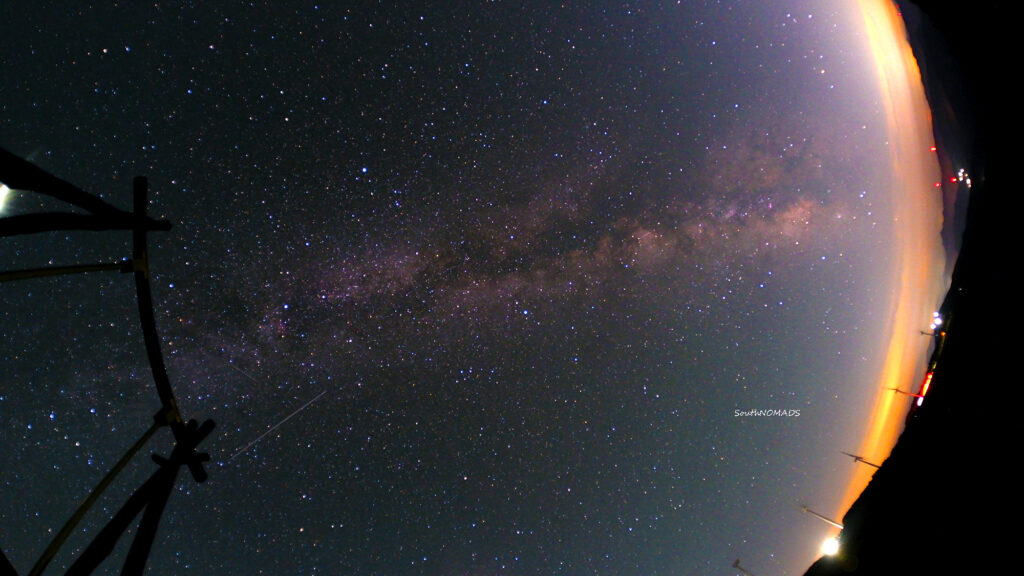
We’ve had many attempts before—many drives, many cold nights, many hopes that didn’t turn into photos. But Yukbaekmajigi was different. This wasn’t just a successful shoot; it felt like a reward for every failed one. Every shutter click felt surreal, because we weren’t just capturing a photo… we were capturing proof that South Korea still has skies like this. The kind of sky that makes you forget the stress of planning, the tiredness of traveling, the frustration of light pollution. That night, the Milky Way was at its peak, and for the first time in all our past attempts, we felt like we weren’t chasing it anymore. We were simply standing beneath it, watching it stretch across Pyeongchang like it belonged there. And maybe it did. Because some places aren’t just locations… they’re Milky Way stages, and Yukbaekmajigi is one of the best in the country.